
Oncospark
Designing an AI-powered denial management system to help surgical practices appeal Medicare claims and recover lost revenue.
Summary
When Medicare denies a claim, it's usually because the documentation doesn't clearly justify why the procedure should be covered. With only 1 in 10 denials ever appealed, surgical clinics lose thousands in recoverable revenue. My team helped reimagine the appeal process to change that.
My Contribution
As the sole product designer on this contract project, I worked alongside a business strategist and 2 engineers to design an AI-assisted Prior Authorization Dashboard, from surfacing denied claims to auto-generating appeal letters, validated directly with clinic staff.
Timeline
Aug to Dec 2025
Team
1 Product Designer
1 Business Strategist
2 Engineers
Tools
Figma Agent
Claude Code
Vercel
VSCode
Skills
User Research
Prototyping
Usability Testing
Full Stack

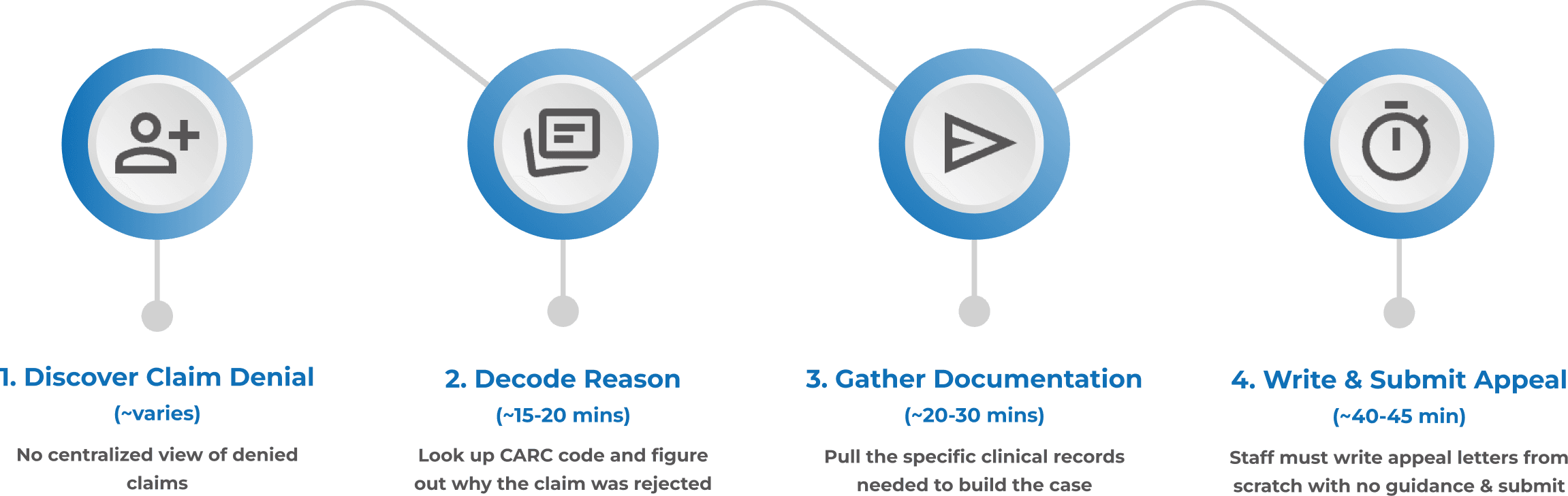
Preventable denials leave surgical clinics with recoverable revenue at risk.
By the Numbers
4.1 million denials
Prior authorization requests denied by Medicare Advantage insurers in 2024.
13+ hours/week
Spent by physicians and staff completing prior authorization requirements.
Only 11.5% appealed
Yet 80.7% of appealed Medicare Advantage denials were overturned when appealed
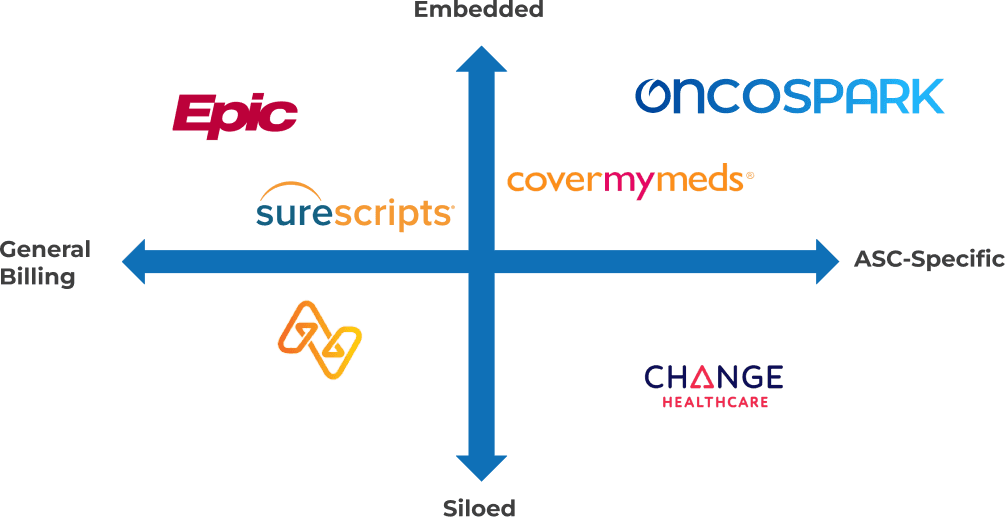
Existing tools leave smaller surgical clinics without one place to understand denials and submit appeals.
General billing tools treat prior auth as one more claim in a queue. ASCs lose revenue when denials are clinical, time-bound, and procedure-specific, so we positioned Oncospark as embedded in the surgical clinic workflow and ASC-specific, not another siloed billing add-on. That quadrant is where staff can triage by revenue at risk and draft appeals without leaving the case.


The final prototype guides staff from denied claim to submitted appeal in three steps.
Secondary market research showed tools like CoverMyMeds help large hospitals manage billing, but don't give smaller surgical clinics an integrated way to track denials, understand why claims are rejected, and file appeals in one place. No existing solution uses AI to interpret denial patterns or generate appeal responses.
The Updated Appeal Process
Prior authorization denials pile up when staff can’t see which cases are recoverable, what’s missing in the chart, or how to structure an appeal. This prototype walks the full loop: surface denied claims by urgency, pull the justification gaps, then draft a citation-backed appeal letter for a clinician to review and submit, keeping human oversight in the loop while cutting the busywork.
Prioritizing which case denials need attention first
Instead of scanning claims one by one, staff can see revenue at risk, approaching deadlines, and denial reasons in one place. Expanding a claim surfaces the context and required documents needed to decide what to appeal and begin the process directly from the dashboard.
Impact & Outcome
The tool transformed a manual, hours-long process into an AI-assisted workflow adopted by clinical operations leadership.
The tool reframed a manual, hours-long appeal process into an AI-assisted workflow that clinical operations leadership approved for further development, backed by a working end-to-end prototype, 2nd place at the 2025 Fung Engineering Health Innovation Competition, and 7 of 8 clinicians saying they’d find it valuable at their clinic if deployed.
Reflection
