HOME / MEDOCITY
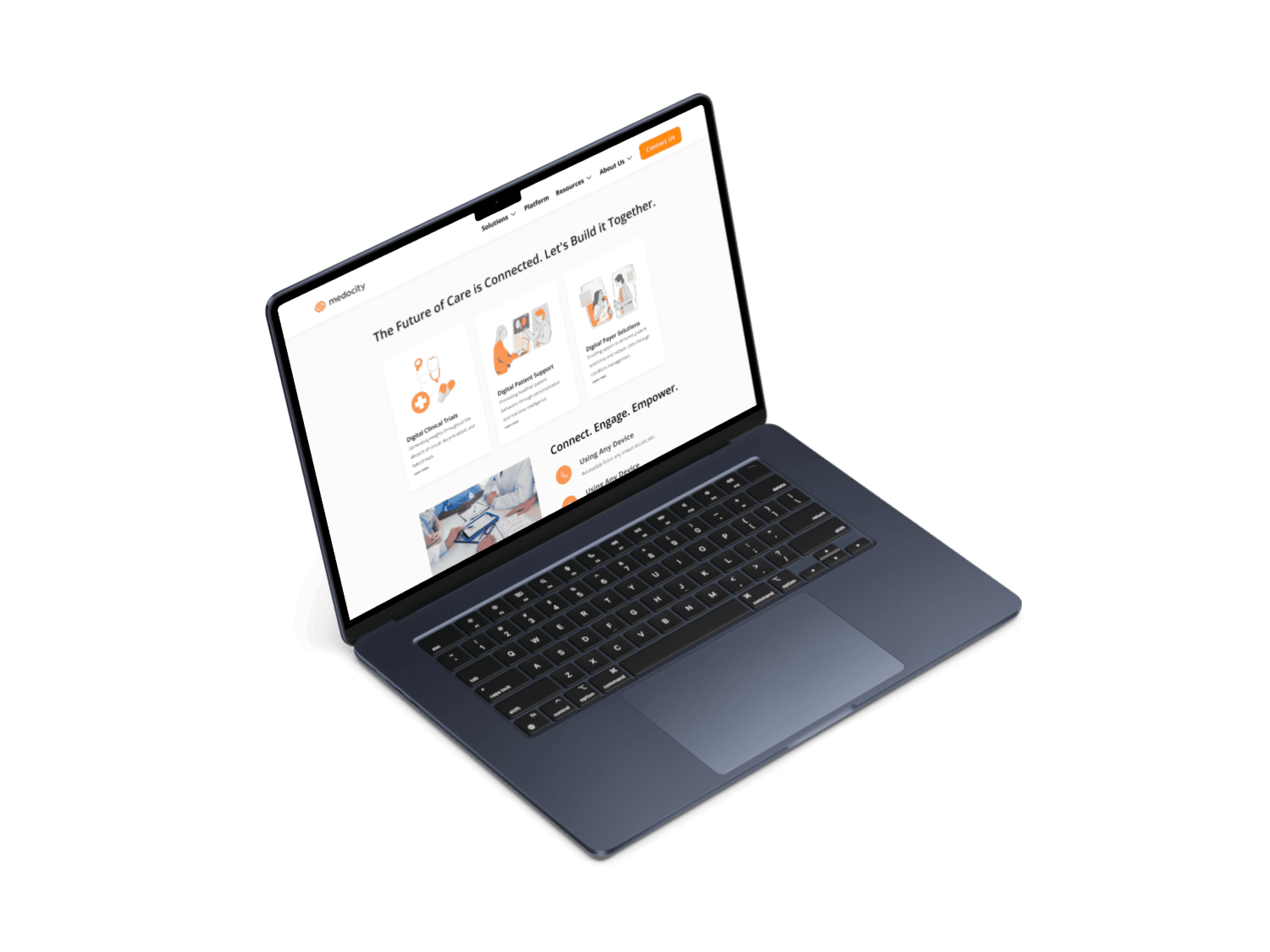
Medocity is a telehealth platform that helps 10,000+ patients manage their health through remote monitoring and engagement tools. Despite its broad offerings, its website converted fewer than 2% of visitors into business inquiries. To address this, a team of five designers from Berkeley Innovation led a full redesign, clarifying Medocity’s value proposition and improving the user experience.
TEAM
1 PRODUCT MANAGER
4 DESIGNERS
TIMELINE
JAN 2024 — MAY 2024
TOOLS
FIGMA
QUALTRICS
SKILLS
USER RESEARCH
VISUAL DESIGN
PROTOTYPING
USABILITY TESTING
FRAMING THE PROBLEM
Healthcare organizations visited the site, but fewer than 2% expressed interest in partnering with Medocity.
63%
Of respondents said the site lacked the credibility to build trust.
78%
Of interviewees noted no cohesive brand identity across pages.

DEFINING THE USER JOURNEY
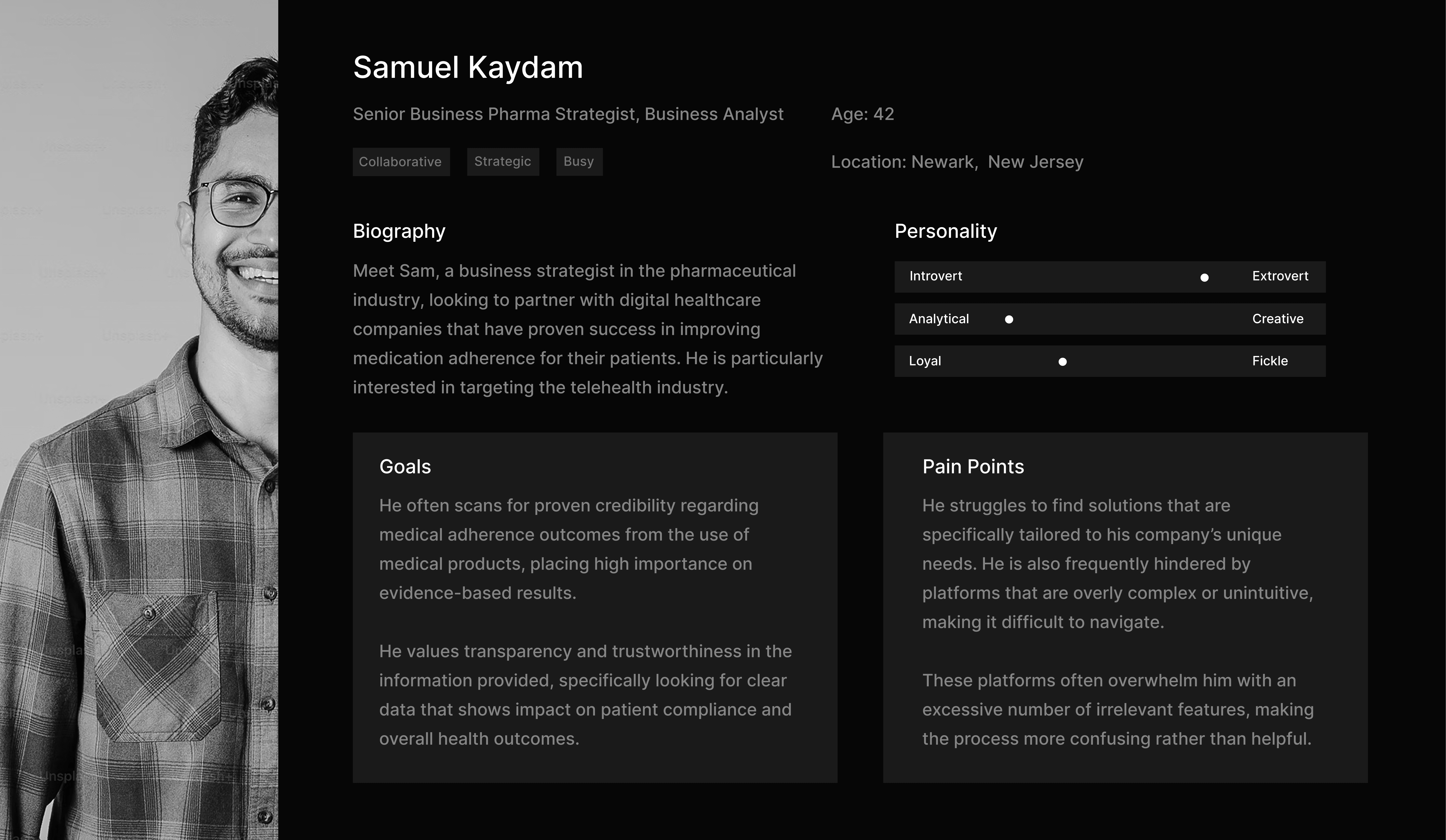
Journey mapping identified a key barrier to conversion: prospective partners struggled to quickly assess Medocity's credibility due to fragmented information and inconsistent trust signals.

TLDR;
How might we strategically redesign Medocity’s website to more effectively engage healthcare stakeholders and significantly increase the target-visitor conversion rate?
KEY DESIGN DECISIONS
We prioritized visible credibility signals, highly scannable content, and a consistent brand experience when redesigning the website.
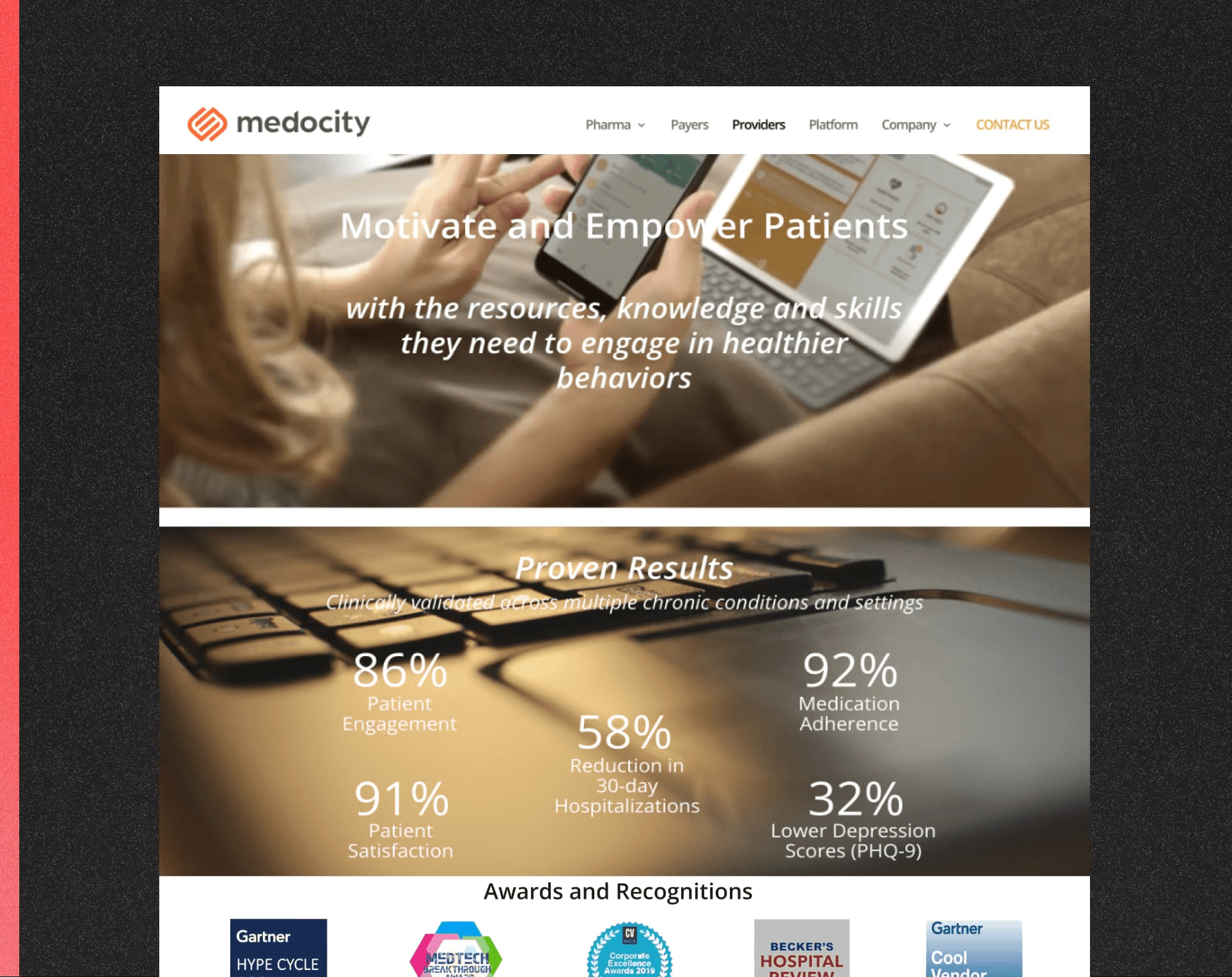
Before: Lack of Clarity

Lacked visual focus and relied on overwhelming amounts of text.
Buried key value propositions, creating a confusing and less trustworthy user experience.
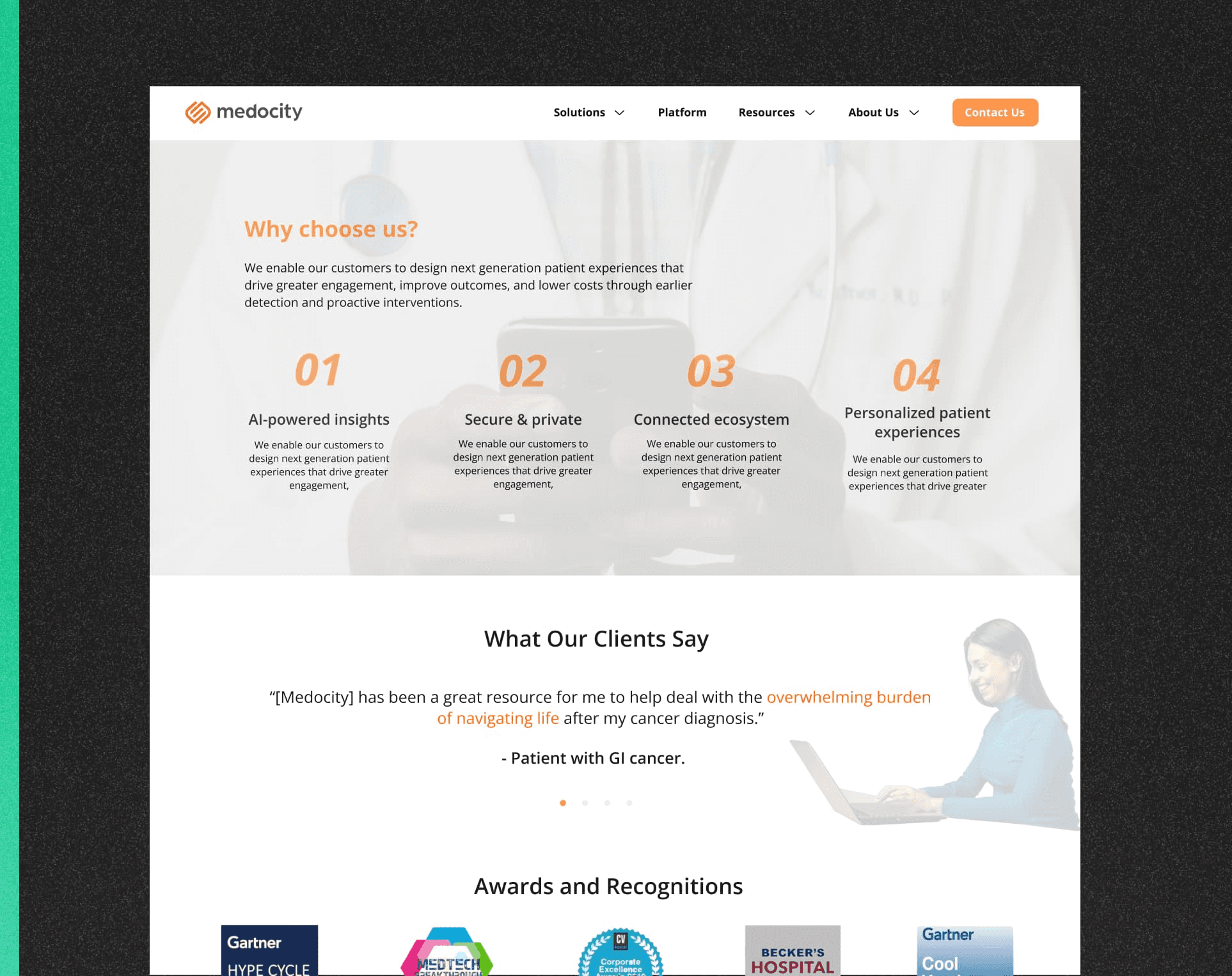
After: Clear Value Proposition

Highlighted key metrics, Medocity's mission, testimonials, and accreditations upfront
Reinforced credibility while making the value proposition easier to understand
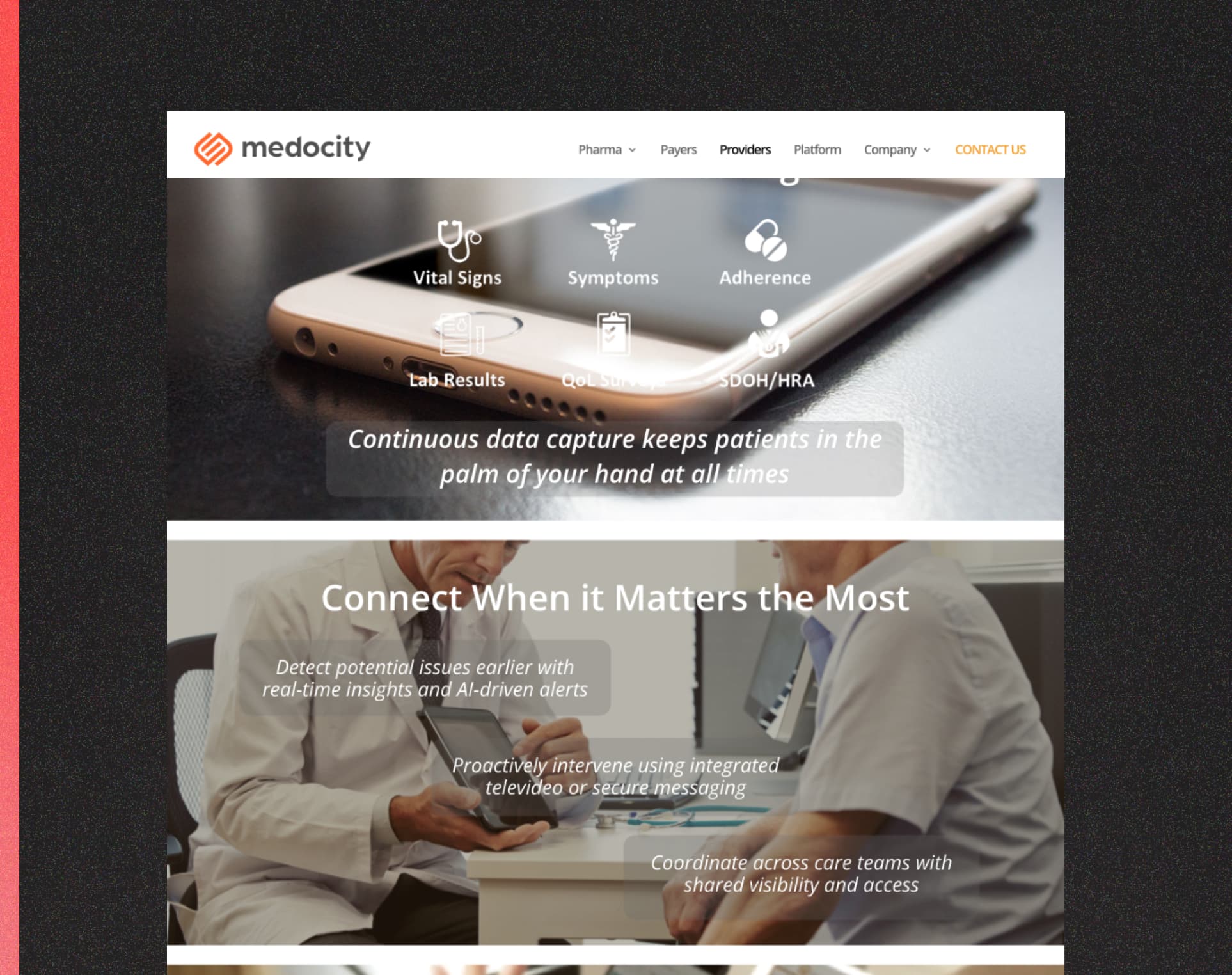
Before: Lack of Information Hierarchy
Relied heavily on inaccessible text and lacked engaging visuals or interactive prototypes
Made it difficult for stakeholders to quickly grasp Medocity's value proposition
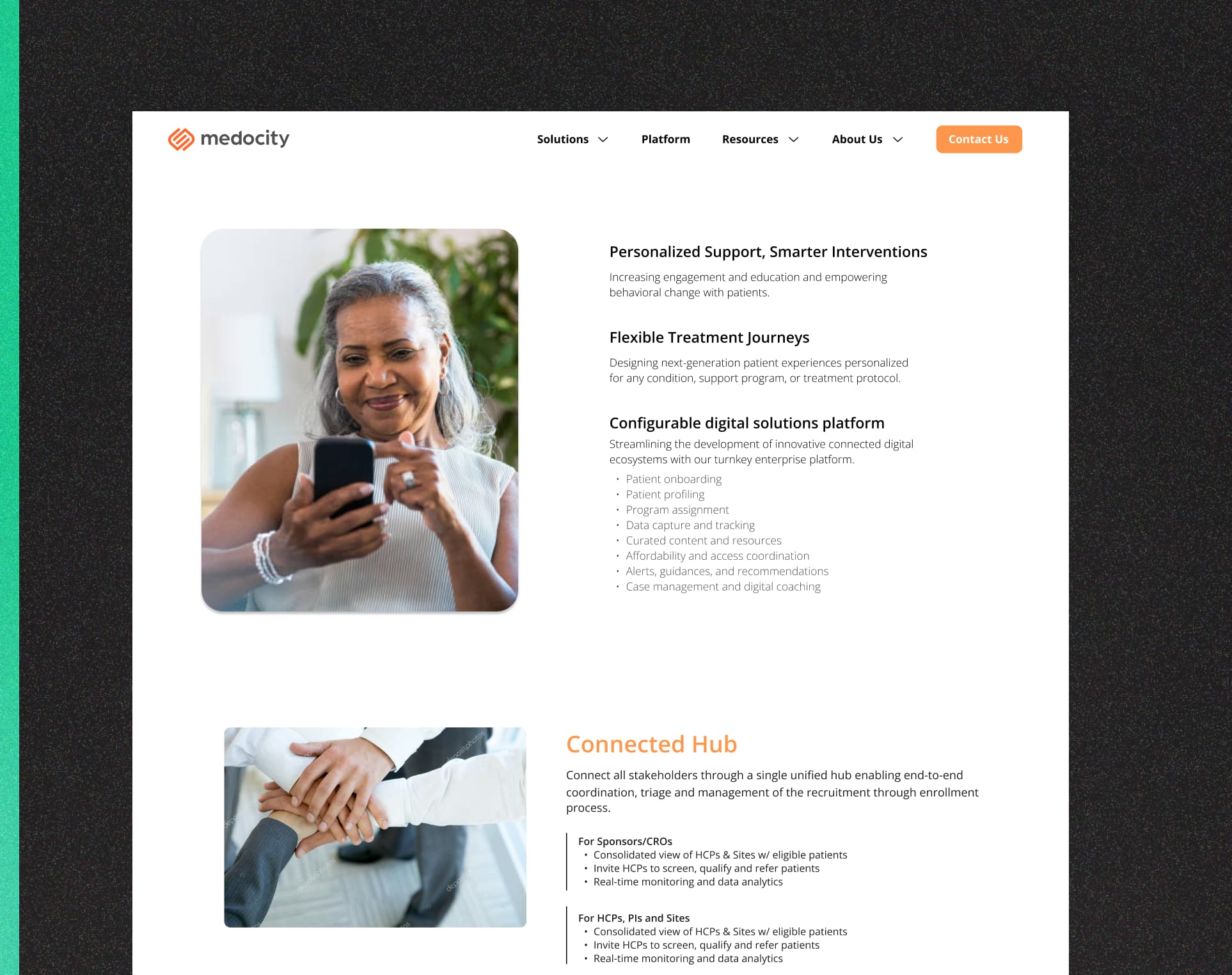
After: Clear UX Writing and Engaging Visuals
Focused on concise UX writing, brand-appropriate visuals, and a new FAQ section
Made it easier for stakeholders to quickly find key information and understand Medocity's value proposition at a glance
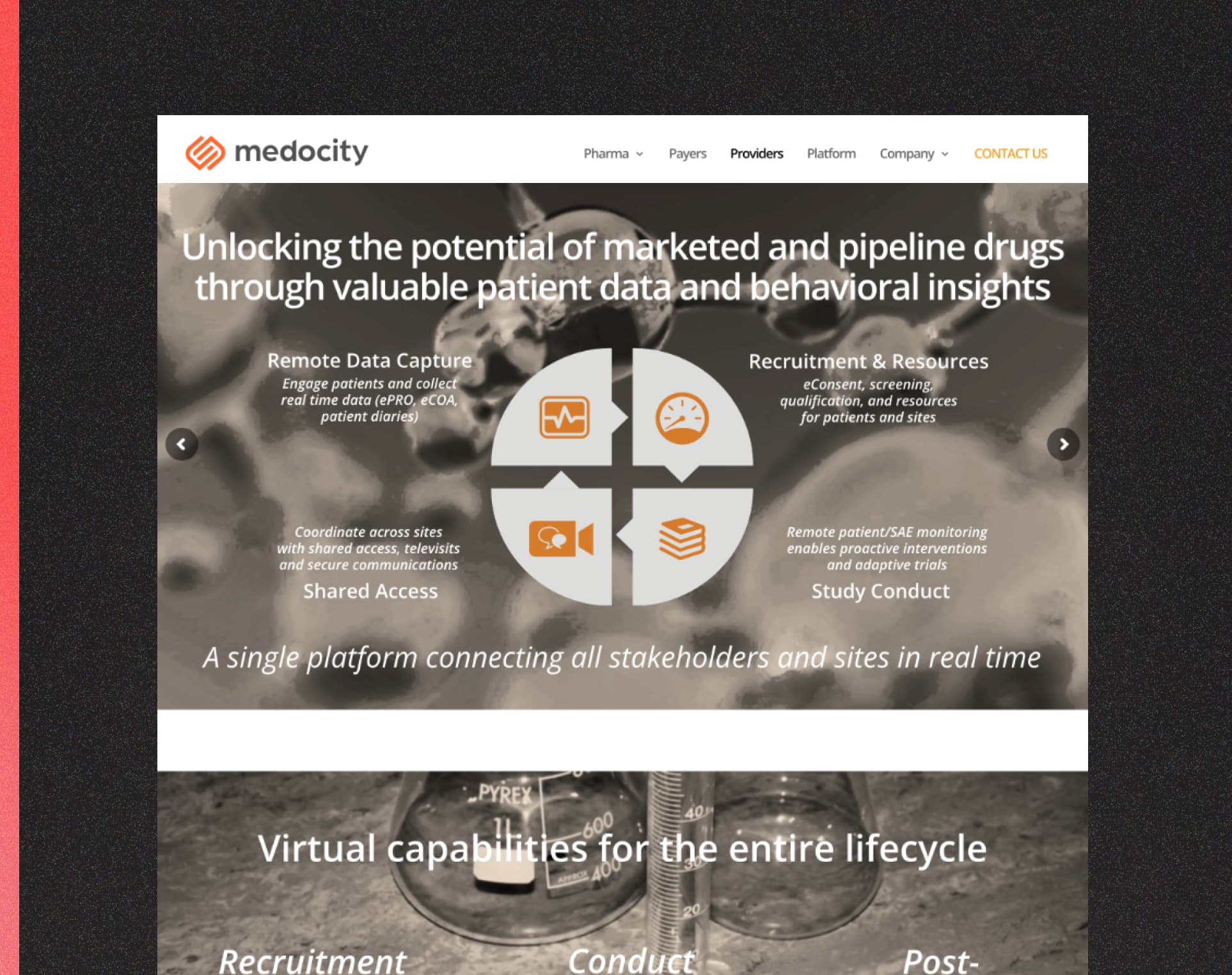
Before: Inaccessible, Uninspiring Visuals
Lacked engaging prototypes that resonated with stakeholders
Was overloaded with information, making Medocity's value difficult to communicate

After: A Scannable Value Proposition
Added three interactive mobile prototypes to guide users through each stage of the clinical trial process
Ended with a clear call to action that encourages visitors to book a demo
FINAL SOLUTION
The redesign introduces clear, branded content across every page, transforming the website into an experience that helps prospective partners quickly understand and trust Medocity's value.


OUTCOME
The redesign consolidated Medocity's fragmented messaging into a single, cohesive experience centered on credibility, scannability, and brand consistency, validated through usability testing before handoff to the client for deployment.
The redesign was approved by Medocity for deployment, validated through usability testing that showed a 75% reduction in task completion time among participants compared to the pre-redesign site. With client sign-off secured, the new experience is set to replace Medocity's live website, translating directly into the clarity and credibility stakeholders said the original site lacked.
